
I Sorted 100 Comments — Only 7 Needed a Reply
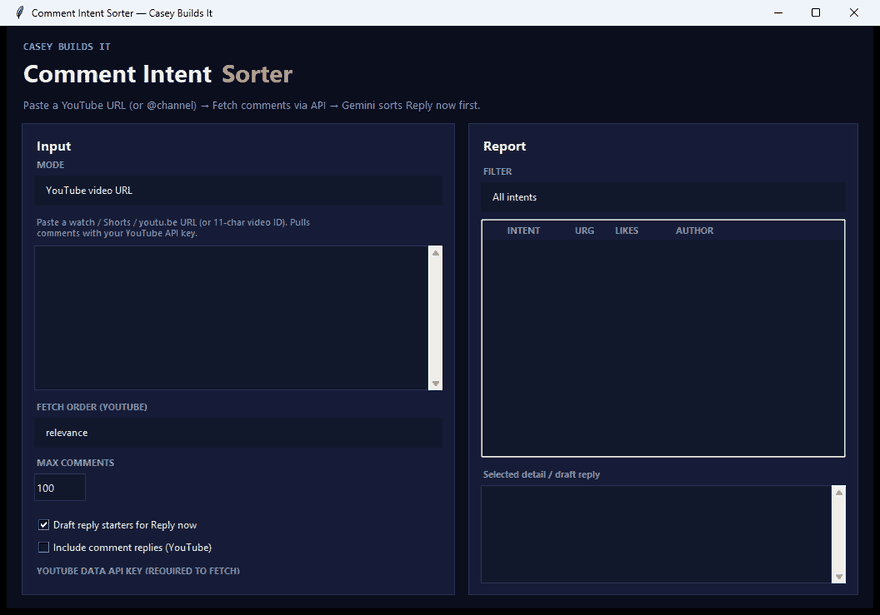
You upload a video, comments start pouring in, and an hour disappears while you scroll trying to figure out who actually needs a reply. Somewhere in that pile is one real question buried under spam, praise, and people just yelling into the void. I ran 100 real comments through a tool I built, and only 7 of them actually needed a response. Here's how it works.
The Problem With Comment Sections
Comment sections are noisy by design. Thank yous, spam links, hate comments, feature requests, and the occasional genuine question all land in the same feed with zero sorting. Most creators either ignore comments entirely or burn time scrolling through everything to find the handful that matter. Neither option scales.
What Comment Intent Does
Comment Intent is a desktop tool that reads through a comment dump — or a YouTube video URL — and sorts every single comment into buckets that actually matter:
- Reply Now — real questions or issues that need a response
- Praise — nice to see, no action needed
- Feedback — suggestions and feature requests worth tracking
- Hate — comments to ignore or moderate
- Spam — links and bot noise
- Chatter — general commentary that doesn't need engagement
Once everything is sorted, the tool ranks the Reply Now pile by urgency and can even draft a short reply starter, so you're not staring at a blank box trying to figure out what to say to each person.
How the Build Works
Comment Intent runs on Gemini for the analysis and was built as a Python desktop app inside Cursor. The workflow is simple: paste in a batch of comments or drop in a video URL, let Gemini read and categorize each one, then review the sorted output. In testing, running it on a messy, realistic comment set — install questions, thank yous, spam links, hate comments, and feature requests mixed together — showed exactly how fast it separates signal from noise. What would normally take an hour of scrolling took seconds.
The build prompt behind the tool is also open to customize. If you want different buckets, a different reply tone, or logic tuned to your specific channel, you can drop that prompt into Cursor or any AI tool and adjust it to fit how you actually talk to your audience.
Key Takeaways
- Most comment sections are mostly noise — a small fraction typically need a real reply
- Sorting by intent (question vs. praise vs. spam vs. hate) beats reading comments in raw order
- Ranking by urgency means you handle the most important replies first
- The underlying prompt is customizable, so the categories and tone can match your channel
If this is the kind of build that saves you real time, follow along for more build-in-public tools and AI automation projects made for creators.